
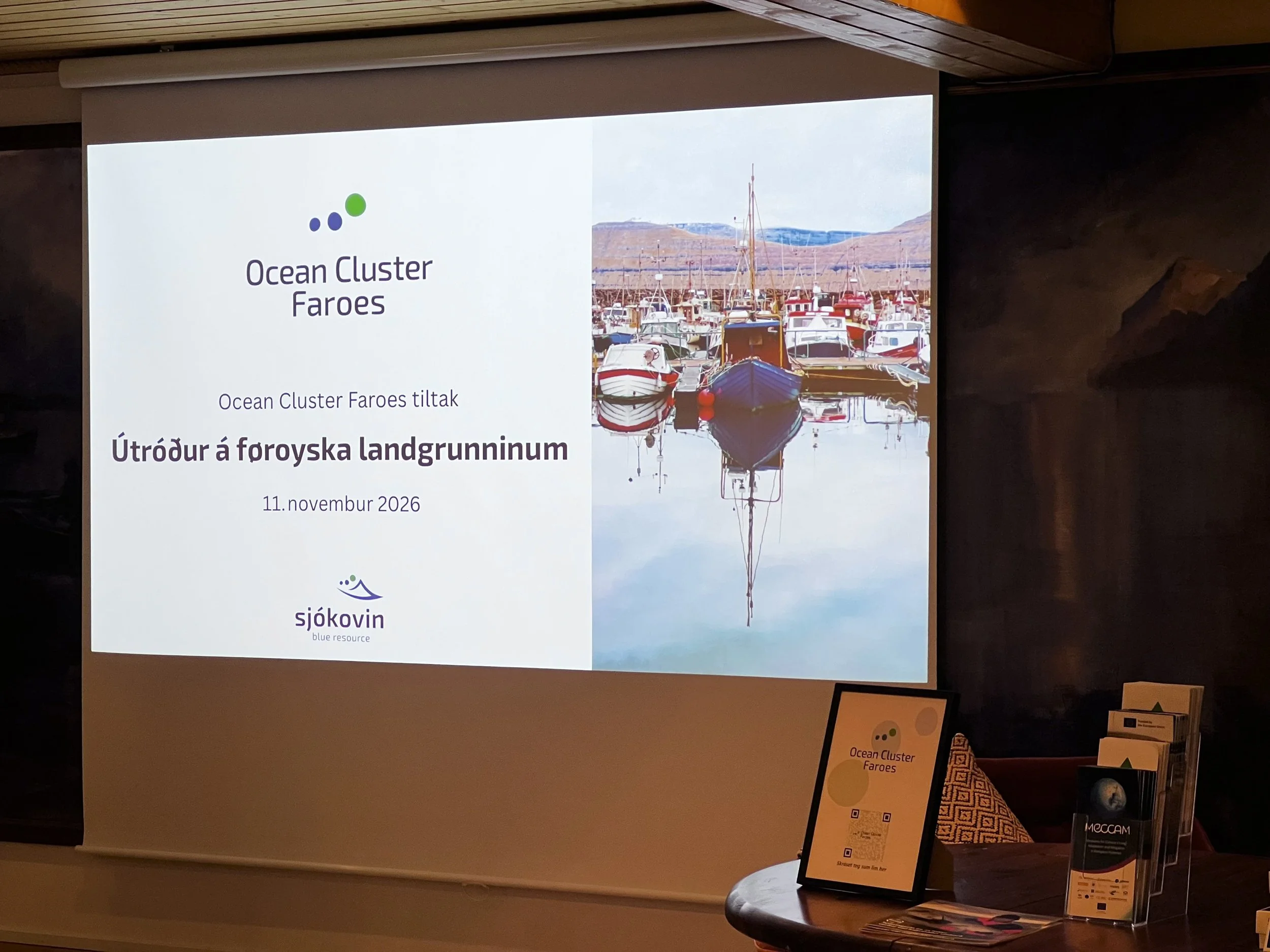
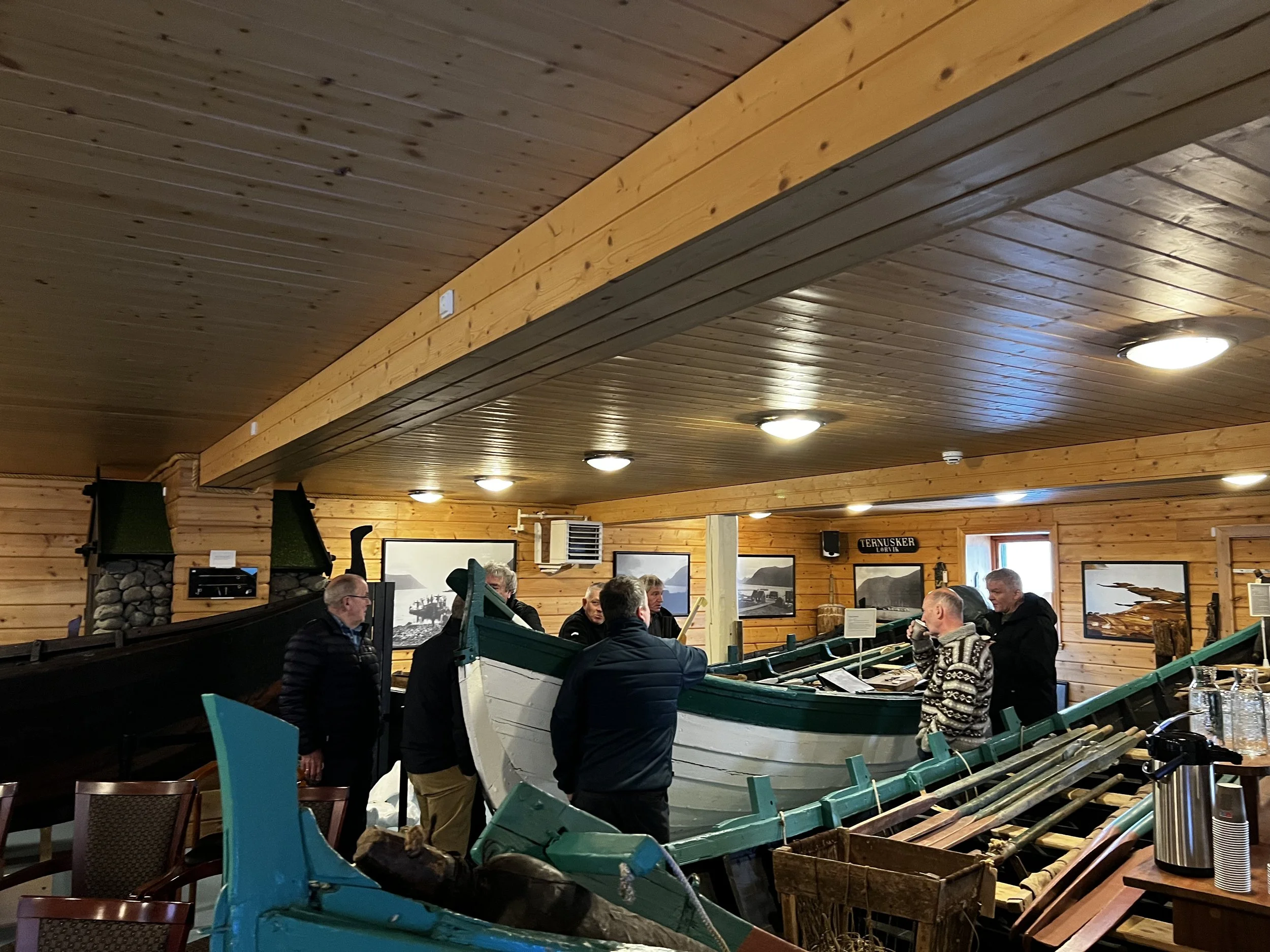
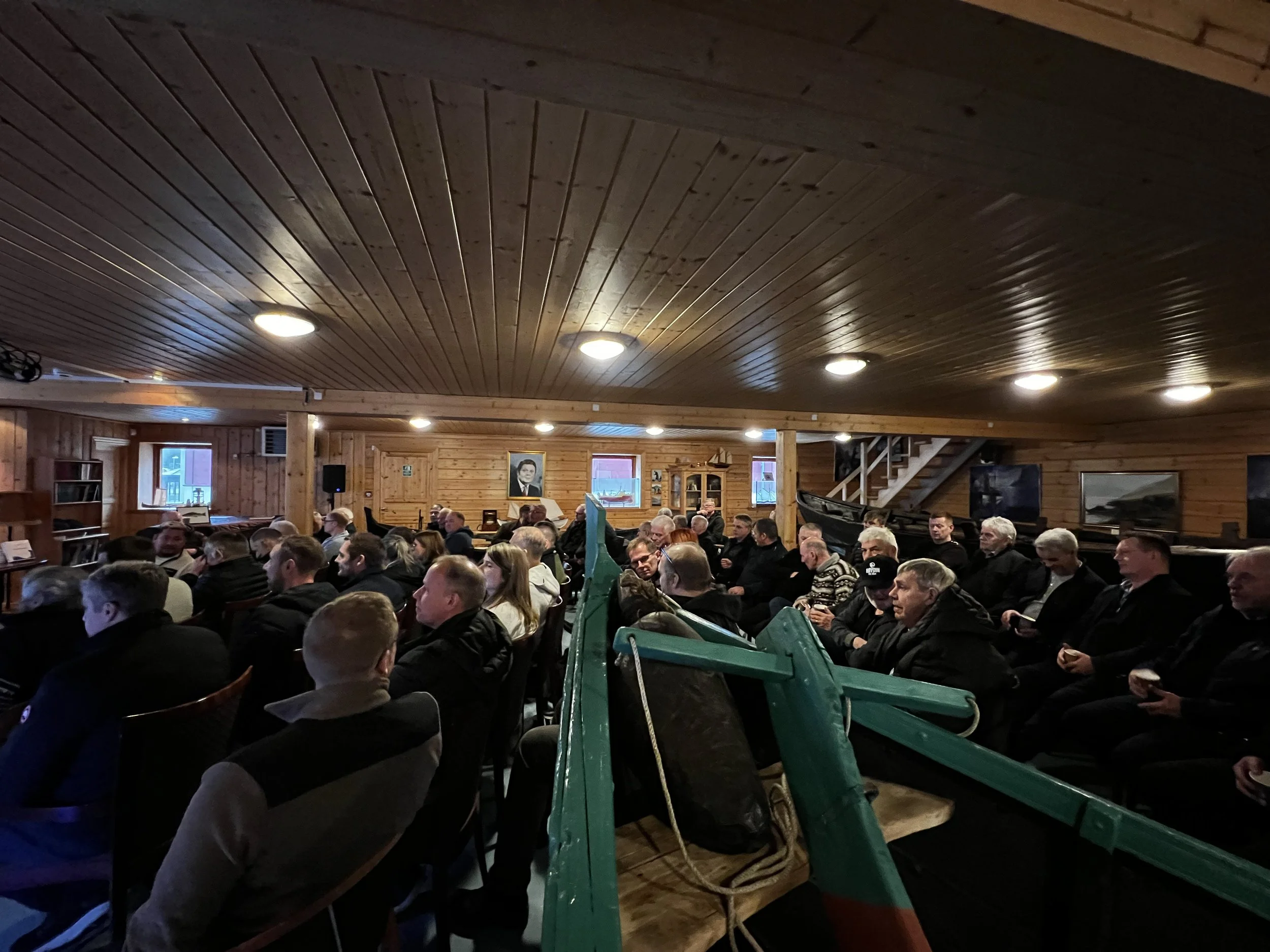
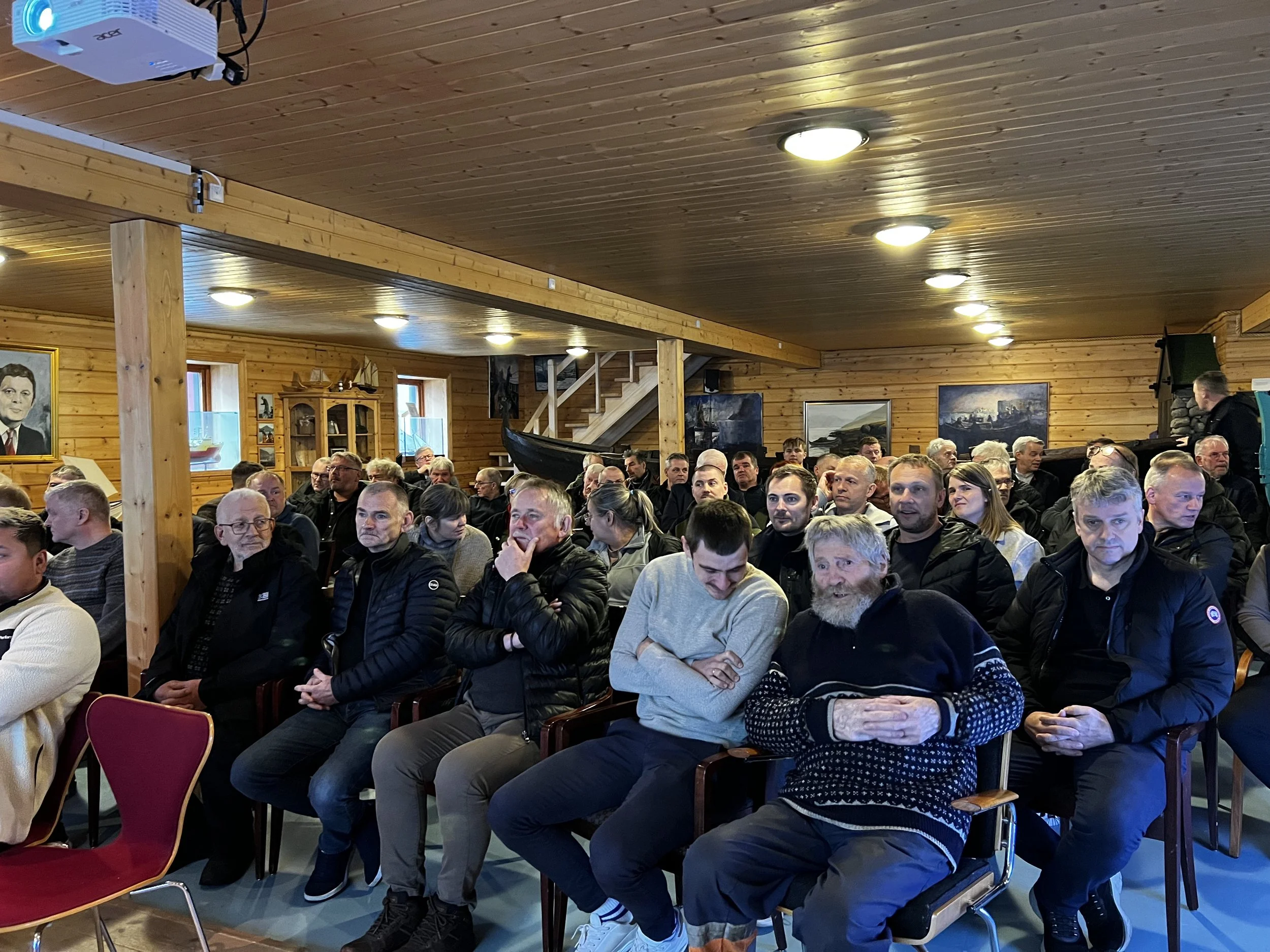
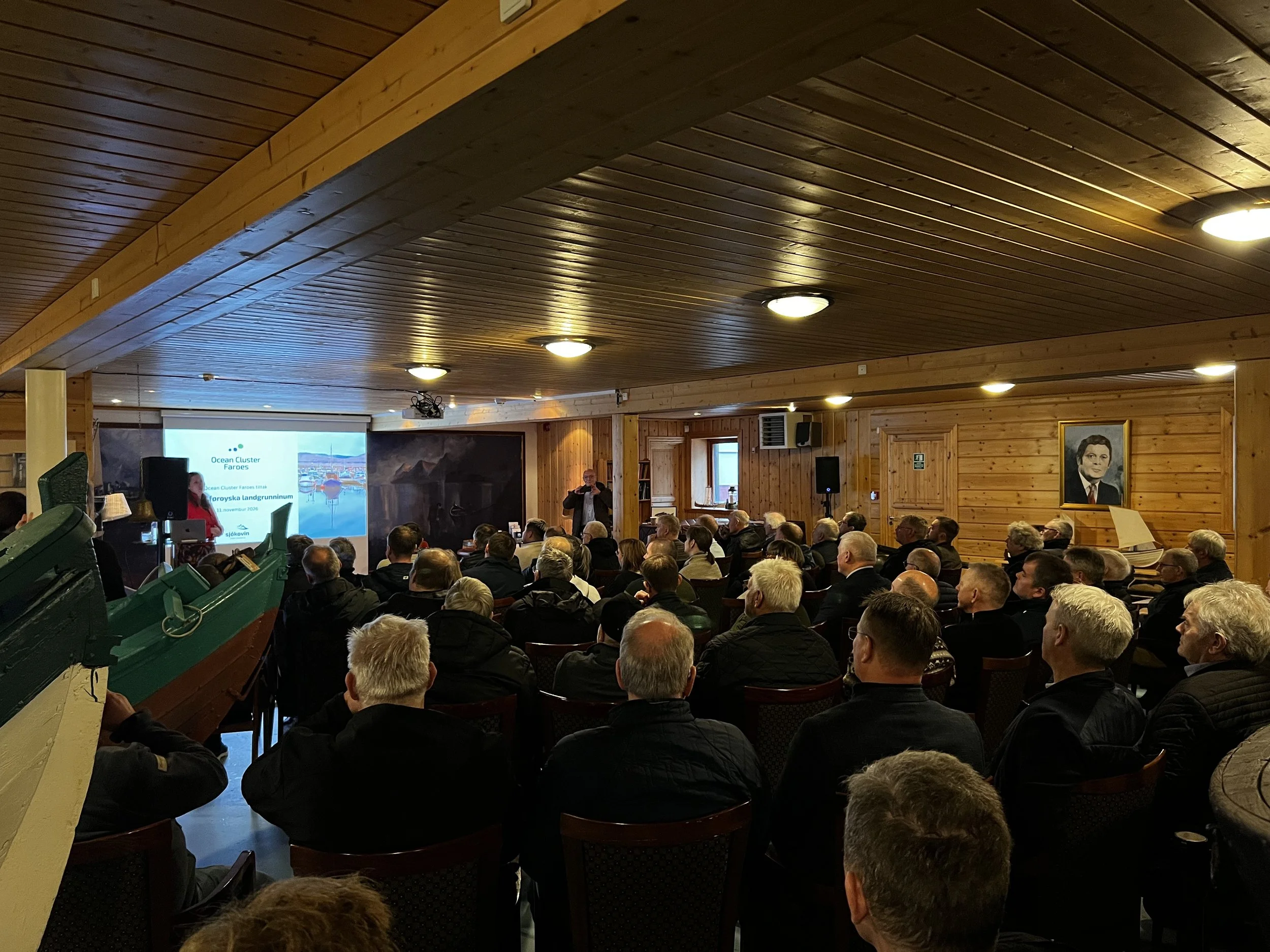
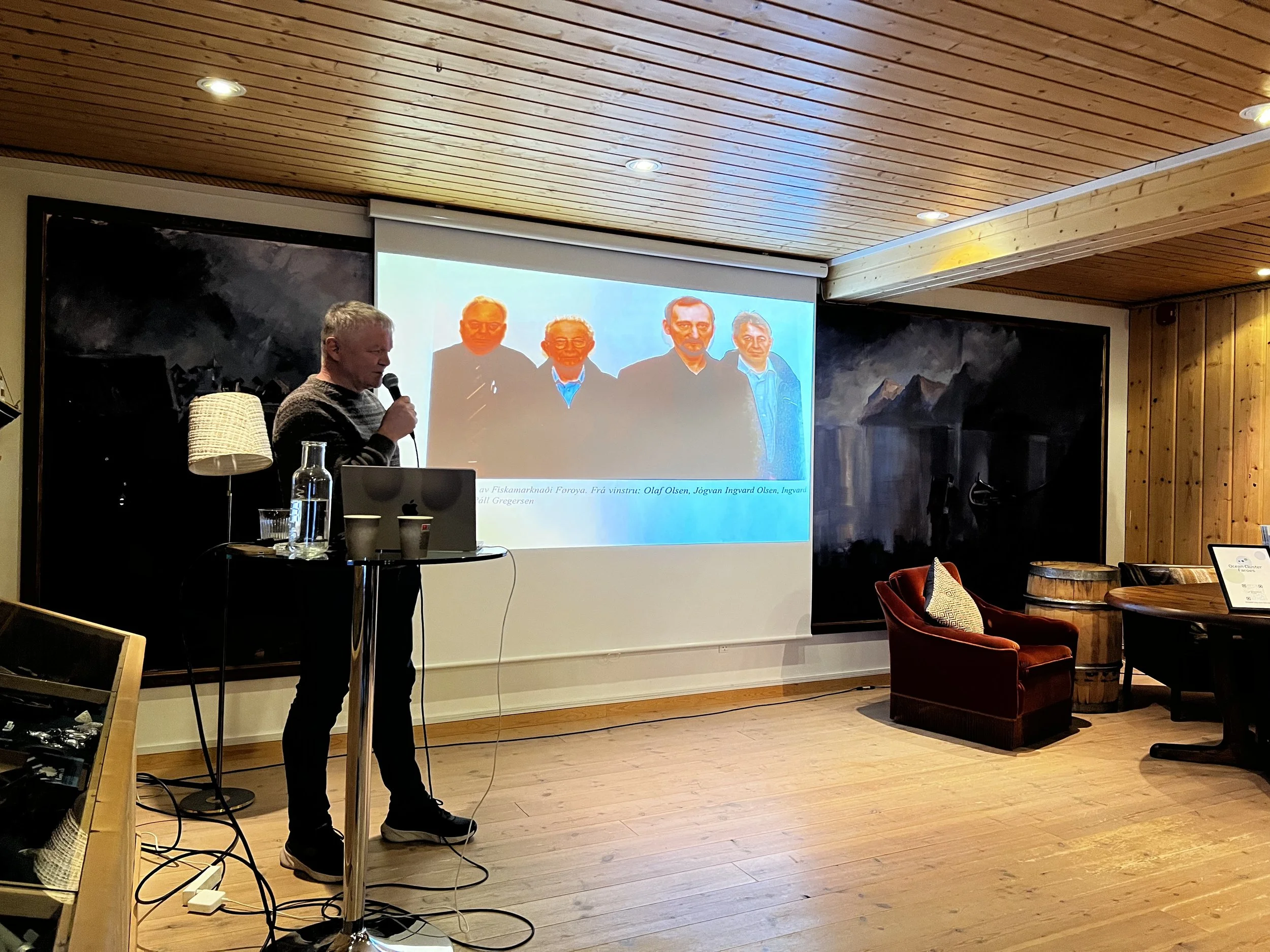
On Wednesday, the 11th of November, Ocean Cluster Faroes organised an event on small-scale coastal fisheries in the Faroe Islands.
Around 70 people attended, and we are delighted with the strong interest in the topic.
The purpose of the event was to provide an overview of small-scale coastal fisheries in the Faroe Islands today and how the sector has changed in recent years. The topic was explored through both data and the experiences of people working in and around the industry.
An overview of small-scale coastal fisheries in the Faroe Islands
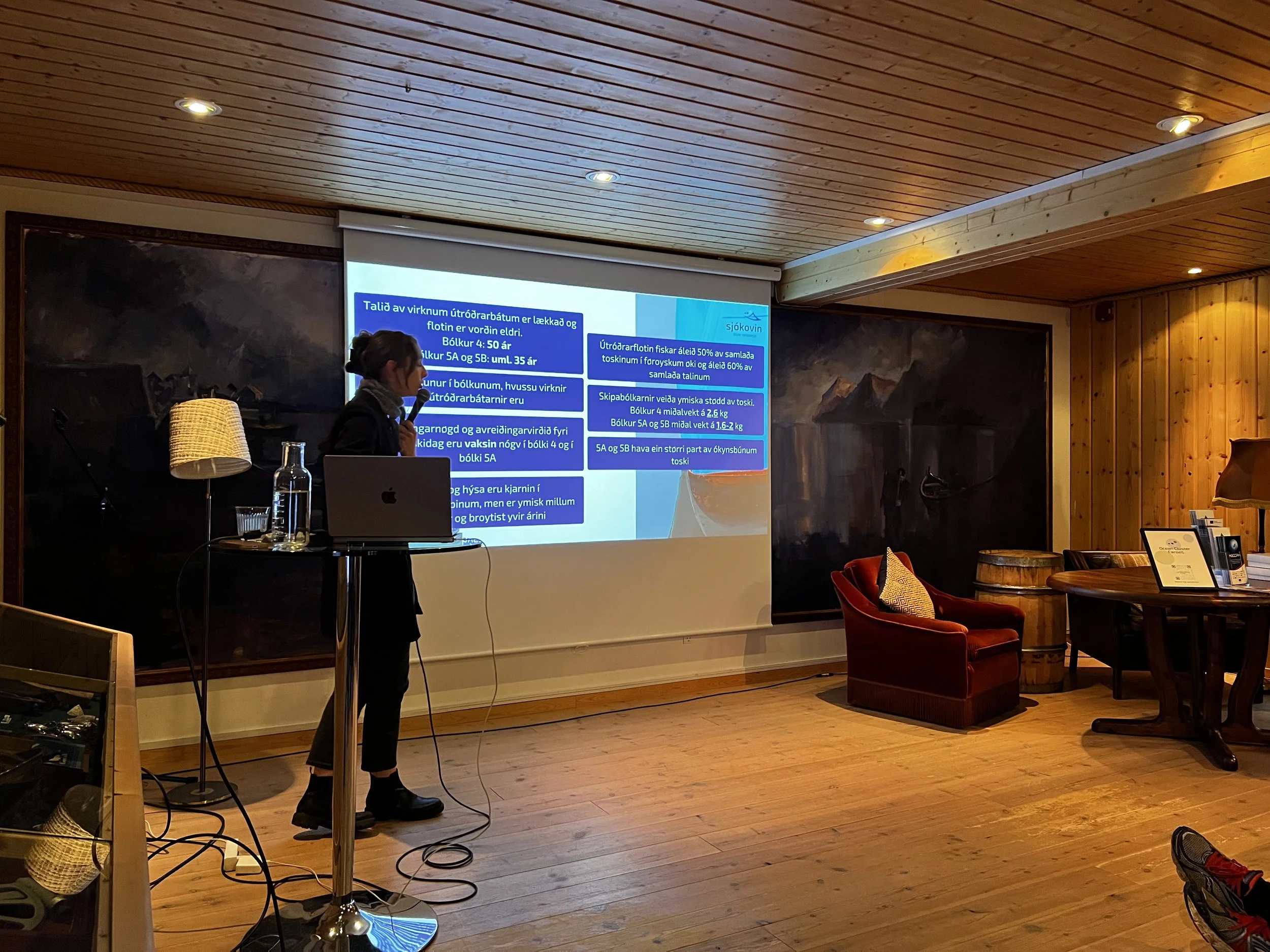
Our researcher, Sigurgunn, opened the event with a presentation providing an overview of small-scale coastal fisheries in the Faroe Islands.
In this context, small-scale coastal fisheries include vessel groups 4, 5A and 5B:
Group 4 comprises commercially operated fishing vessels between 15 and 100 gross registered tonnes (GRT).
Group 5A comprises smaller fishing vessels under 15 GRT, many of which are operated commercially.
Group 5B comprises smaller fishing vessels under 15 GRT, most of which are not operated commercially.
Among other things, the presentation showed that the number of active vessels has declined, while the fleet has grown older. There are considerable differences in how active the individual vessels are, but cod and haddock remain at the core of the fishery.
Both the volume and value of landings have increased significantly in groups 4 and 5A. The small-scale coastal fishing fleet accounts for approximately 50% of the total cod catch in Faroese waters and around 60% of the total number.
The figures also show that the vessel groups catch cod of different sizes. In group 4, the average weight of cod is approximately 2.6 kilograms, while in groups 5A and 5B it ranges from 1.6 to 2 kilograms. Groups 5A and 5B also have a higher proportion of immature cod in their catches.
Personal experience in the industry
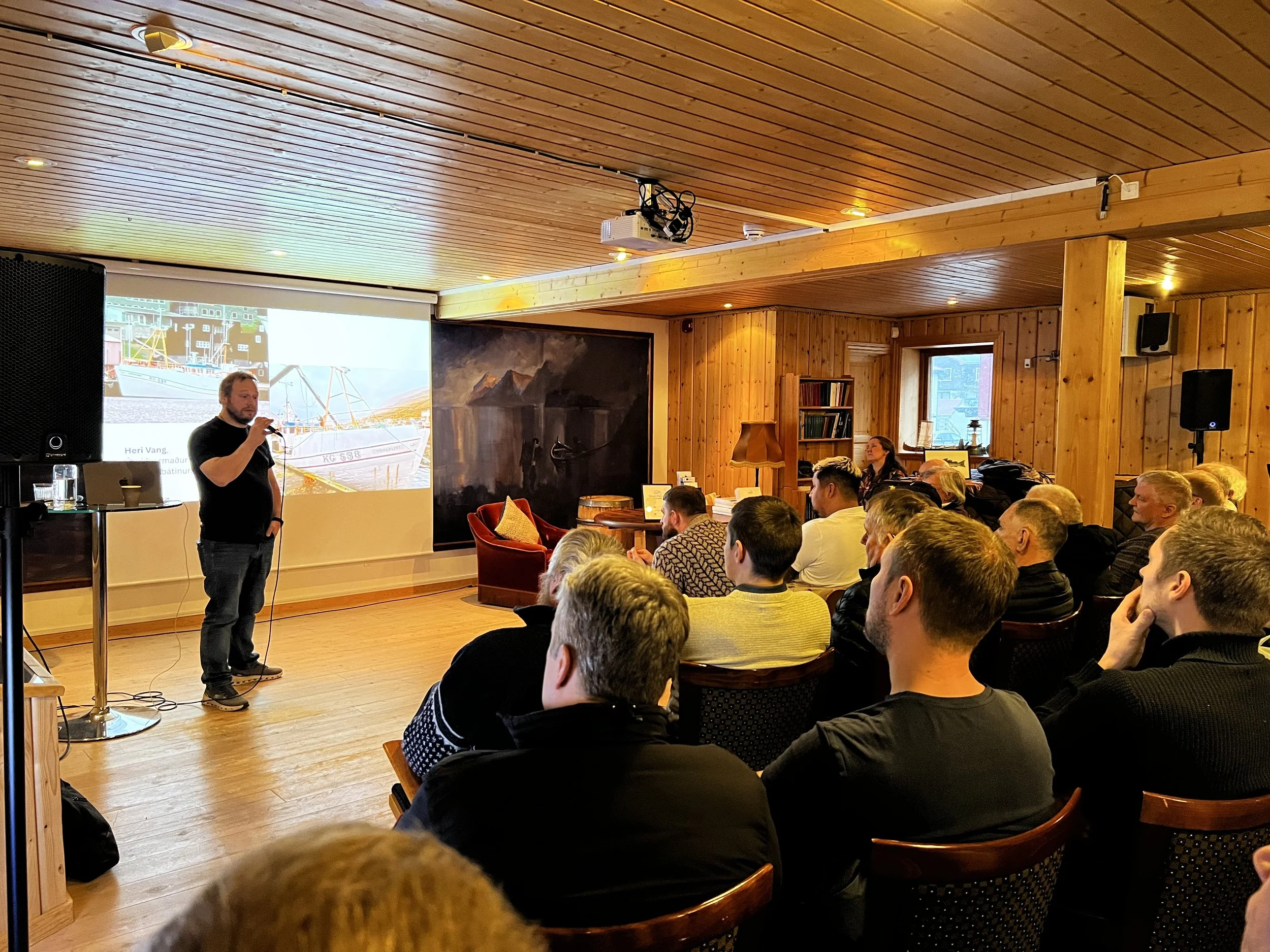
Heri Vang then spoke about life as a small-scale fisherman and reflected on the fleet and developments in the industry.
Although he also has experience working aboard longliners and trawlers, he explained that he prefers small-scale fishing. According to Heri, this type of fishing provides a broad range of experience and professional skills, as the fisherman must be able to perform every task on board. He emphasised the importance of attracting more young people to the sector.
Heri also noted that good catches and favourable fish prices currently make small-scale fishing an attractive occupation. At the same time, he argued that fisheries in Faroese waters have not been managed sufficiently. In his view, fishing pressure has been too high, as reflected in the relatively small size of the cod being caught today. He therefore believes that action must be taken to address the situation.
During his presentation, Heri also discussed the fishing-days system. He considered the system well suited to small-scale fishing vessels, but perhaps less appropriate for larger vessel groups. He noted that it is difficult to compare small-scale vessels with other vessel groups because their fisheries and operating conditions differ considerably.
He also questioned the differences in conditions between the groups and argued that the system should be reviewed. He considered it both unfair and problematic that group 5B, in which most vessels are not operated commercially, has been allocated additional fishing days, while operators engaged in commercial fishing are not granted additional days once the fishing days allocated to their group have been used.
Quality and price go hand in hand
Finally, Høgni Hansen shared observations from his work as managing director of the Faroese Fish Market.
He explained that fish prices can fluctuate and are primarily influenced by supply and demand. The prices received by individual vessels can also vary considerably. Vessels that consistently land high-quality fish often receive better prices because buyers are familiar with the quality of their products and choose to purchase from them. Quality is particularly important when demand is low.
However, the vessel whose catch is selected first does not always receive the best price. If a buyer has committed to supplying a customer with a certain quantity and less fish is available than expected, the buyer may have to offer a higher price to secure the necessary supply.
Høgni also noted that group 4 receives a higher average price than groups 5A and 5B, and that the average price of haddock is increasing.
Overall, the quality of the fish has improved significantly in recent years, partly because fish are handled more carefully on board. Nevertheless, quality continues to vary from year to year. In this context, Høgni referred to 2020, when an unusually high number of thin and poor-quality fish were observed in the landings, and the overall quality of the fish was very poor.
A productive discussion
Each presentation was followed by many interesting questions and a lively discussion among the audience. This demonstrated the strong interest in small-scale coastal fisheries and in the opportunities and challenges facing the sector.
We would like to thank everyone who attended, asked questions and participated in the discussion.